

 Français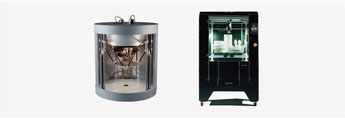
New team member presentation
Pollen AM has welcomed Thibaud Deshons in its team. Thibaud will be in charge of commercial development and will be your first contact at Pollen AM. This is an opportunity for Pollen AM to present a new collaborator.
Pollen AM: Can you describe your professional footpath
I have an engineering background thanks to my studies in an engineering school and a specialization in polymer transformation. After my studies I joined Saint Gobain as a project manager. I worked in the automotive sector and was responsible for the development of plastic injection tools. After 3 years spent in the automotive sector, I wanted to discover a new sector and I was hired by Safran Aircraft Engines as an external industrialization pilot. My role was to support Safran's suppliers in the manufacture and ramp-up of Safran parts. Pollen AM : What is your experience with additive manufacturing?
During my studies, I discovered additive manufacturing but it was presented as a mean of prototyping which was far from my professional interest for product industrialization. Nevertheless I gradually saw additive manufacturing becoming essential in the methods department as a support for product development or production. Then, I used additive manufacturing more and more in the context of my projects, whether at Saint-Gobain or Safran.
Pollen AM : What was the context of your 3D printing applications?
I relied a lot on 3D printing during industrialization. First of all, it was a strong vector of communication. Once the definition was fixed, I used to print a part in order to start working with suppliers. This had the advantage of making the pre-project meetings more dynamic and helping everyone to project themselves on the manufacture of the part.
In addition, the possibility of having a part with the desired dimensions from the beginning of the project allows real-time savings on industrialization. Industrialization schedules have a fairly long critical path that follows the progress of the part. By obtaining the final geometry at the beginning of the industrialization, it is possible to break this path by parallelizing operations.
Having a physical part at the beginning of the industrialization allows you to optimize your planning, especially for technical development. Whether it is in the production of tooling or the control program, having the final geometry allows you to carry out the development whereas no serial part is available.
For inspection, for example, you always plan a programming week and then a setup week once the part is available. Thanks to 3D printing, these actions can be carried out in hidden time and thus get out of the critical path. This practice can be extended to other applications such as tooling and results in a significant reduction of the time required for the process.
Finally, I also used to favour additive manufacturing for tools or inspection jigs. In these cases, it is the freedom of design and the speed of execution that brings real gains. For example, a tool in additive manufacturing is generally made available in three days, whereas in conventional manufacturing it can take several weeks.
Pollen AM : Do you have other industrial applications for additive manufacturing?
Additive manufacturing presents two main advantages: the freedom in conception and speed of implementation.
When you work within an industrial program, you are required to respect certain program milestones which consist in making parts available to the customer. In an automotive program, the customer requests parts for assembly tests when your industrial equipment is not yet mature. This situation is also found in aeronautics in the context of certification.
As said before, the production of tools in additive manufacturing accelerates their availability. Moreover, milestone deliveries often correspond to smaller volumes which then make additive manufacturing competitive. You can ensure your first deliveries with printed parts in the expected material while the industrial tooling is still under development. This clearly lowers the level of criticality and avoids taking shortcuts that you regret later on.
Still in the same way, I have sometimes been blocked when the work of the design office was longer than expected. In this case you receive the part definitions too late to ensure the delivery milestones, which remain unchanged. Additive manufacturing is then very useful to anticipate the output of the definition, you can prepare printed raw parts with an overthickness on the unfrozen areas. These parts can be used as blanks for machining and finishing operations to obtain finished parts on time and in accordance with the latest developments.
Pollen AM : To conclude how do you discover Pollen AM?
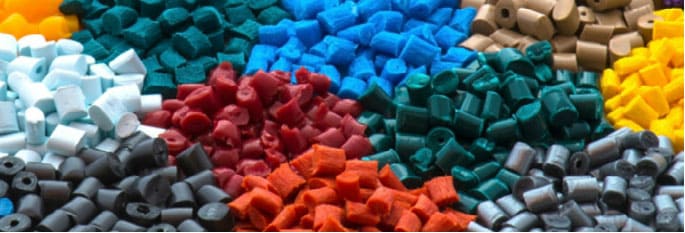
I was in charge of a technology surveillance about additive manufacturing when I discovered Pollen AM. Having started my career in plastic injection moulding, I particularly appreciated Pollen AM's approach which based its technology on the transformation of pellets.
What convinced me was the openness of the machine to industrial materials.
I sincerely believe that additive means are complementary to traditional means. In my experience I have always used 3D printing as a support for the setting up of the industrial tool or to unblock constraining situations.
The machines proposed by Pollen AM correspond perfectly to this vision because the opening on the materials allows the machine to adapt to the industrial needs according to each phase of the product cycle. You can use it as a prototyping machine as well as a small series production machine for parts made of the same materials as big batch production. For me, this adaptability is essential in mastering the industrialization process because it is an essential lever for industrial competitiveness.
I have an engineering background thanks to my studies in an engineering school and a specialization in polymer transformation. After my studies I joined Saint Gobain as a project manager. I worked in the automotive sector and was responsible for the development of plastic injection tools. After 3 years spent in the automotive sector, I wanted to discover a new sector and I was hired by Safran Aircraft Engines as an external industrialization pilot. My role was to support Safran's suppliers in the manufacture and ramp-up of Safran parts. Pollen AM : What is your experience with additive manufacturing?
During my studies, I discovered additive manufacturing but it was presented as a mean of prototyping which was far from my professional interest for product industrialization. Nevertheless I gradually saw additive manufacturing becoming essential in the methods department as a support for product development or production. Then, I used additive manufacturing more and more in the context of my projects, whether at Saint-Gobain or Safran.
Pollen AM : What was the context of your 3D printing applications?
I relied a lot on 3D printing during industrialization. First of all, it was a strong vector of communication. Once the definition was fixed, I used to print a part in order to start working with suppliers. This had the advantage of making the pre-project meetings more dynamic and helping everyone to project themselves on the manufacture of the part.
In addition, the possibility of having a part with the desired dimensions from the beginning of the project allows real-time savings on industrialization. Industrialization schedules have a fairly long critical path that follows the progress of the part. By obtaining the final geometry at the beginning of the industrialization, it is possible to break this path by parallelizing operations.
Having a physical part at the beginning of the industrialization allows you to optimize your planning, especially for technical development. Whether it is in the production of tooling or the control program, having the final geometry allows you to carry out the development whereas no serial part is available.
For inspection, for example, you always plan a programming week and then a setup week once the part is available. Thanks to 3D printing, these actions can be carried out in hidden time and thus get out of the critical path. This practice can be extended to other applications such as tooling and results in a significant reduction of the time required for the process.
Finally, I also used to favour additive manufacturing for tools or inspection jigs. In these cases, it is the freedom of design and the speed of execution that brings real gains. For example, a tool in additive manufacturing is generally made available in three days, whereas in conventional manufacturing it can take several weeks.
Pollen AM : Do you have other industrial applications for additive manufacturing?
Additive manufacturing presents two main advantages: the freedom in conception and speed of implementation.
When you work within an industrial program, you are required to respect certain program milestones which consist in making parts available to the customer. In an automotive program, the customer requests parts for assembly tests when your industrial equipment is not yet mature. This situation is also found in aeronautics in the context of certification.
As said before, the production of tools in additive manufacturing accelerates their availability. Moreover, milestone deliveries often correspond to smaller volumes which then make additive manufacturing competitive. You can ensure your first deliveries with printed parts in the expected material while the industrial tooling is still under development. This clearly lowers the level of criticality and avoids taking shortcuts that you regret later on.
Still in the same way, I have sometimes been blocked when the work of the design office was longer than expected. In this case you receive the part definitions too late to ensure the delivery milestones, which remain unchanged. Additive manufacturing is then very useful to anticipate the output of the definition, you can prepare printed raw parts with an overthickness on the unfrozen areas. These parts can be used as blanks for machining and finishing operations to obtain finished parts on time and in accordance with the latest developments.
Pollen AM : To conclude how do you discover Pollen AM?
I was in charge of a technology surveillance about additive manufacturing when I discovered Pollen AM. Having started my career in plastic injection moulding, I particularly appreciated Pollen AM's approach which based its technology on the transformation of pellets.
What convinced me was the openness of the machine to industrial materials.
I sincerely believe that additive means are complementary to traditional means. In my experience I have always used 3D printing as a support for the setting up of the industrial tool or to unblock constraining situations.
The machines proposed by Pollen AM correspond perfectly to this vision because the opening on the materials allows the machine to adapt to the industrial needs according to each phase of the product cycle. You can use it as a prototyping machine as well as a small series production machine for parts made of the same materials as big batch production. For me, this adaptability is essential in mastering the industrialization process because it is an essential lever for industrial competitiveness.