

 Français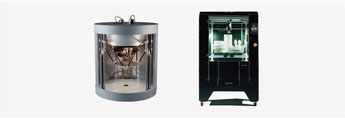
Ultra soft TPE with Pam Series P
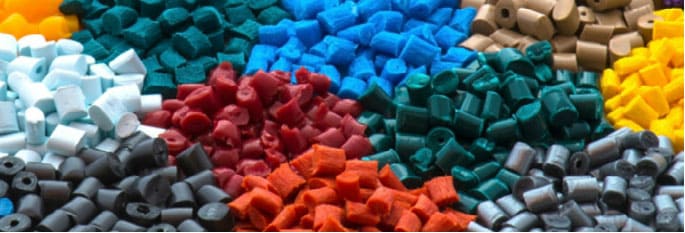
Flexible materials… Before there were natural rubbers and then synthetic two component rubbers. In the 70’s, thermoplastic elastomers (TPEs) came out and it has been the revolution for industrial production: easy to process, large panel of flexibility, recyclable, capable of being coloured, injection-mouldable…
Since TPE are everywhere present in our day-to-day life: toothbrush pad, kitchen pan, sport shoes, joysticks, even your child use it while eating with its favourite baby spoon.
TPE is a big family of different material chemistries giving name to TPU, TPS, TPO subclasses. Each chemistry gives specific properties in terms of mechanical and chemical resistance, and make each subclass more suitable for a particular application.
However, TPE express their properties over a large range of hardness : from very hard to ultra-soft texture. Scale named ‘Shore A’ is used to measure and classify material hardness.
Hence, a 95 Shore A TPE can be used in rubber caster whereas, 80 shore A TPE are more appropriate for shoe heels. Tyre reads are made out of 70 shore A and 40 shore A TPE is typically the pink eraser. Rubber bands are made out of 20 Shore A TPE whereas, racket ball and chewing gum are below 0 shore A. In fact, Shore 00 scale, which is below Shore A, is specially dedicated to the definition of very soft material hardness.
The good news, in all of this, is that with Pam series P you can print any TPE, of any chemistry and, of any hardness.
Actually, we have printed TPE decreasing step-by-step hardness. From 90 Shore A to arrive finally at the bottom end of the shore scale 00!
Ultra soft TPE of 1 shore 00, which has the texture of gummy gelly candy, is processable with Pam series P.
Saying that Pam series P is the only 3D printer machine in the world to print this extremely soft material, makes us just a little bit proud, we have to confess!
TPE is a big family of different material chemistries giving name to TPU, TPS, TPO subclasses. Each chemistry gives specific properties in terms of mechanical and chemical resistance, and make each subclass more suitable for a particular application.
However, TPE express their properties over a large range of hardness : from very hard to ultra-soft texture. Scale named ‘Shore A’ is used to measure and classify material hardness.
Hence, a 95 Shore A TPE can be used in rubber caster whereas, 80 shore A TPE are more appropriate for shoe heels. Tyre reads are made out of 70 shore A and 40 shore A TPE is typically the pink eraser. Rubber bands are made out of 20 Shore A TPE whereas, racket ball and chewing gum are below 0 shore A. In fact, Shore 00 scale, which is below Shore A, is specially dedicated to the definition of very soft material hardness.
The good news, in all of this, is that with Pam series P you can print any TPE, of any chemistry and, of any hardness.
Actually, we have printed TPE decreasing step-by-step hardness. From 90 Shore A to arrive finally at the bottom end of the shore scale 00!
Ultra soft TPE of 1 shore 00, which has the texture of gummy gelly candy, is processable with Pam series P.
Saying that Pam series P is the only 3D printer machine in the world to print this extremely soft material, makes us just a little bit proud, we have to confess!