

 Deutsch
Your seal will be molded in a soft KRAIBURG TPE. Why prototype it in stiff TPU filament?
Pam 3D printers print the pellets you already buy for injection molding. Same grade, same supplier, properties close to the molded part.
See us at Formnext 2026, Frankfurt, 17 to 20 November, Hall 12.1, booth A78.
Material suppliers and end users such as KRAIBURG TPE and Decathlon Pulse work with Pollen AM.
A filament prototype validates a shape, not a part
The wrong properties
Stiffness, grip, heat and chemical resistance are those of the filament, not of your final grade. Your tests prove nothing about the real part.
Late, expensive surprises
Real-material problems show up after the mold is cut. On a multi-material shoe sole, right-material prototypes saved about 90 days of iterations and around 18,000 € of tooling per prototype.
A catalogue you can't use
Filament ranges are narrow and expensive. Your certified grade, your colour or your compound usually don't exist as filament.
Print the grade you will produce with
PAM technology extrudes pellets directly: the raw material of the whole injection molding industry, from your usual supplier.
- Validate function, not just shape, from the first prototype.
- Thousands of commercial grades: TPE from Shore 00 to Shore D, PP, PA, PEI, filled and certified compounds, metal and ceramic feedstocks.
- 2 to 4 extruders to combine rigid and soft materials, or a coarse fill with fine contours, in one part.
- One machine from prototype to series: jigs, fixtures, spare parts and small batches.
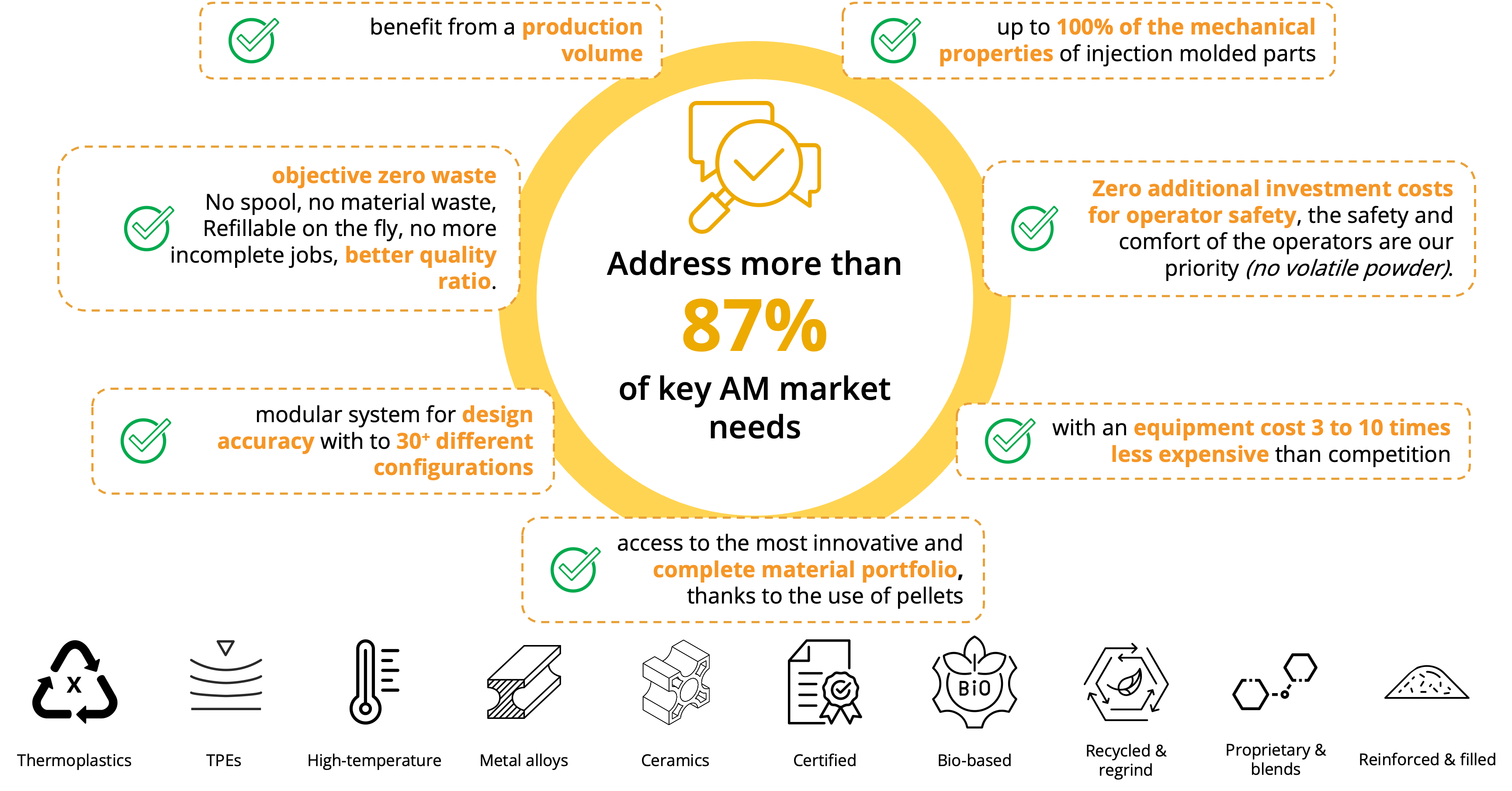
Filament, pellets or injection: what you really get
| Filament 3D printing | Pam pellet 3D printing | Injection molding | |
|---|---|---|---|
| Material | Limited filament range | Your production grade | Your production grade |
| Material cost | High | Pellet price, 5 to 100x lower | Pellet price |
| Tooling | None | None | Mold required |
| Lead time | Days | About 1 week | 6 to 8 weeks |
| Certified grades | Rare | Fire/smoke, medical, food contact, toy safety, EMI | Yes |
| Multi-material | Limited | 2 to 4 extruders | Overmolding tool |
| Best for | Shape checks | Functional prototypes, tooling, small series | Mass production |
Bring your pellets to Formnext
Tell us which grade you use. We print a part in your material before the show, and you take it home from our booth.
- Register your materialbefore 3 November, with the form on this page.
- Send about 1 kg of pelletsWe confirm feasibility within 48 hours.
- We print your parta test part or a simplified version of your design.
- Collect it in FrankfurtHall 12.1, booth A78, with the print settings we used.
Places are limited and subject to technical feasibility.
Register my material
What it changes for your team
R&D and materials
Test new grades and compounds in hours, without a mold. Multi-extrusion opens new material combinations.
R&D use casesDesign engineers
Validate grip, flexibility and resistance on the real material before you freeze the design.
Design use casesProduction and process
Print jigs, fixtures, tooling and spare parts in-house, in the grades your plant already stocks.
Production use casesProcurement and management
Pellet material cost, no tooling and fewer mold iterations: a faster, cheaper path to the right part.
Download the brochureMeasured against injection-molded parts
With the right grade and the right settings, printed parts match or beat their molded equivalent.
| Material | Property | Result |
|---|---|---|
| KRAIBURG TPE TC6MLBThermoplastic elastomer, 30 Shore 00 | Tensile strength | 100 %of the molded part |
| ABS Lotte StarexPrinted in the X/Y plane | Stress at yield | 109 %of the molded part |
| polyMIM 316LStainless steel, sintered | Porosity | < 1 %566 MPa tensile strength |
Four machines, one process
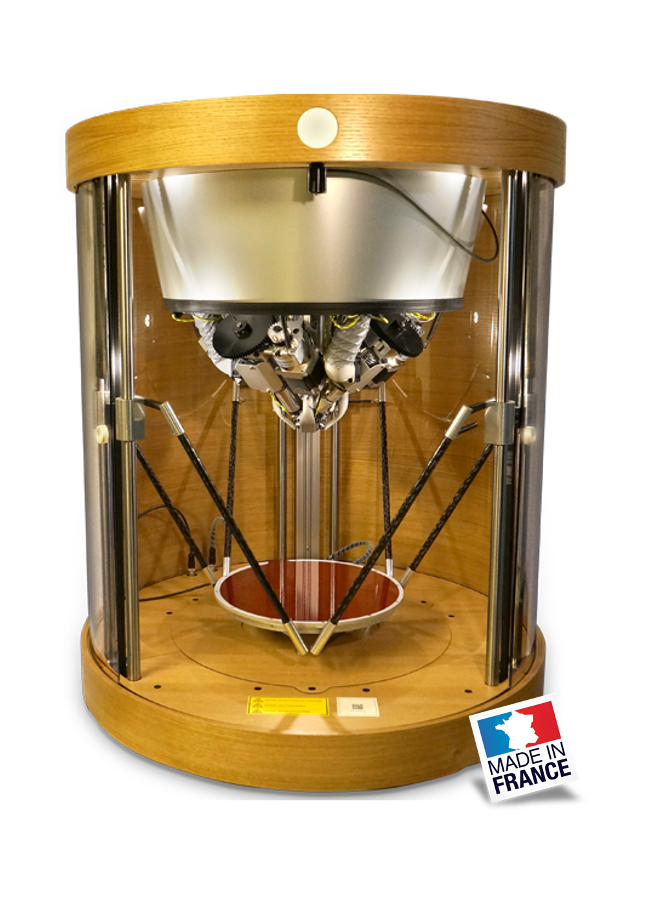
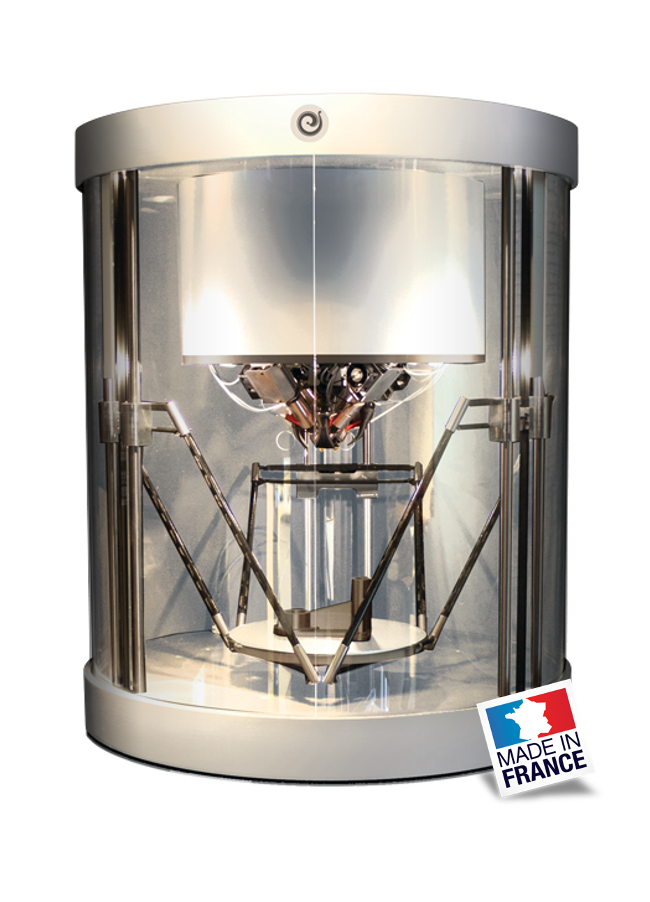
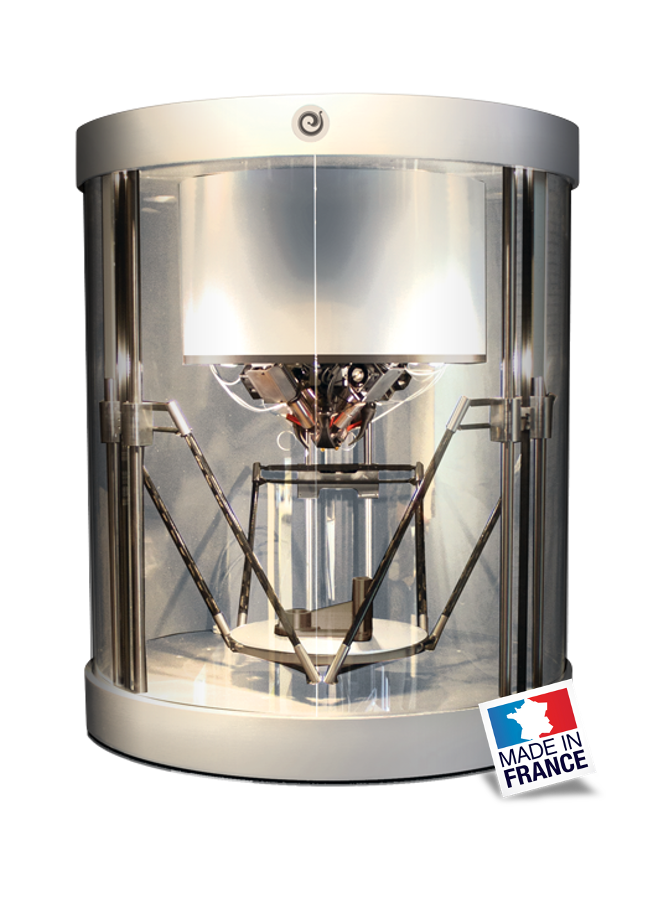
pam o2 MC
Metal and ceramic feedstocks. 2 to 4 reinforced extruders, up to 450 °C.
Discover pam o2 MC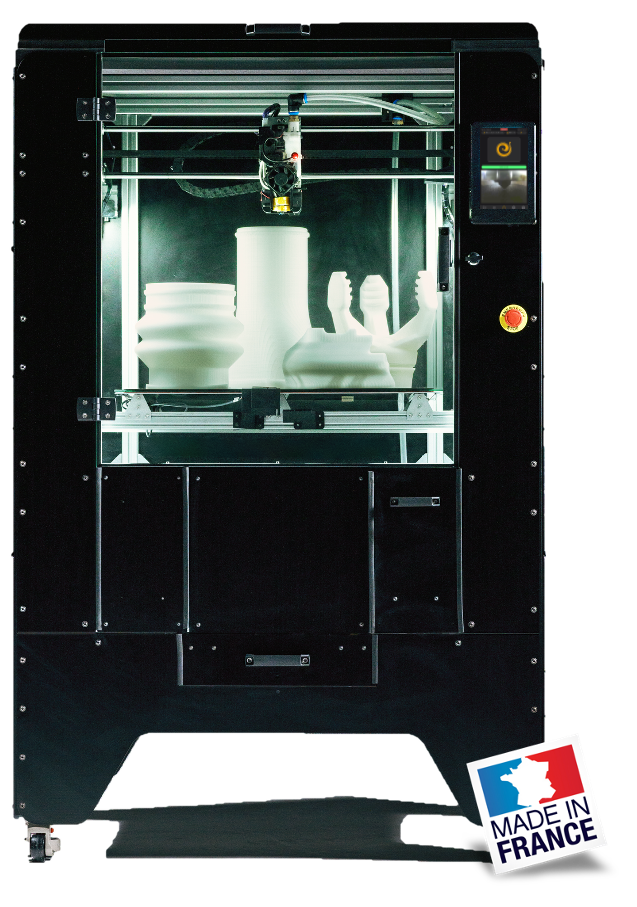
Pam Pro
Largest and fastest, up to 500 mm/s, with fully automated calibration. Built for production.
Discover Pam ProQuestions we hear at every show
Isn't pellet printing hard to tune?
Every machine comes with validated print profiles, Cura powered by Pollen AM (ready-to-print or expert mode with 400+ settings), HoneyPrint control software and the PollenHive e-learning platform. For a new grade, our engineers can develop the profile for you.
Will my specific grade work?
Most injection grades can be printed. The fastest way to find out is the Bring Your Pellets challenge, or a material qualification by our lab.
Can I print certified materials?
Yes. You print the same grade as in injection, so grades certified for fire and smoke, medical use, food contact or toy safety are already validated on our machines.
Is it only for prototypes?
No. Customers use pam printers for tooling, jigs and fixtures, spare parts and small series. On a flame-retardant polycarbonate part, the printed part passed the same vertical burn test as the molded one, with no tooling and a 1-week lead time instead of 6 to 8 weeks.
What support do I get after purchase?
Remote training, technical support from Pollen AM engineers, and services such as profile development, compounding and part production.
See your material printed in Frankfurt
Formnext 2026, 17 to 20 November, Hall 12.1, booth A78. Thirty minutes with an application engineer, focused on your part and your grade.
Not going to Frankfurt? Get free printed samples or watch the webinar replay.